


In the landscape of celebrity political activism, few positions have carried more professional risk over the past two years than vocal support for Palestinian liberation. Melissa Barrera was fired from the Scream franchise for Instagram posts calling Gaza a “concentration camp.” Susan Sarandon was dropped by her talent agency after attending pro-Palestinian rallies. The message to entertainers has been clear: speak out for Palestine, face consequences.
Yet three Black female entertainers have moved decisively in the opposite direction. Nicki Minaj, Tiffany Haddish, and Azealia Banks have become vocal pro-Israel advocates—not quietly, but provocatively, in ways that directly antagonize their fan bases. And they’ve done so while navigating serious legal troubles that would typically render public figures radioactive to mainstream platforms.
The timing alone invites scrutiny. As Minaj faces the potential forced sale of her $20 million mansion to satisfy an unpaid assault judgment, she’s found herself on Turning Point USA stages spouting MAGA talking points. As Haddish’s career cratered following dismissed child abuse allegations, she embarked on a publicity tour to Israel and began delivering pro-Israel rants at comedy festivals. As Banks fights ongoing defamation and stalking allegations from her former label boss, she declared herself “a Zionist” across 45 social media posts and performed in Tel Aviv despite boycott calls.
Three entertainers. Three sets of legal troubles. Three sudden embraces of one of the most polarizing geopolitical stances available. Whether this represents opportunism, desperation, genuine political evolution, or something else entirely remains unclear. But the pattern itself deserves examination—particularly when we consider which controversies are deemed career-ending in entertainment, and which open new doors.
The Mansion and the MAGA Turn: Nicki Minaj
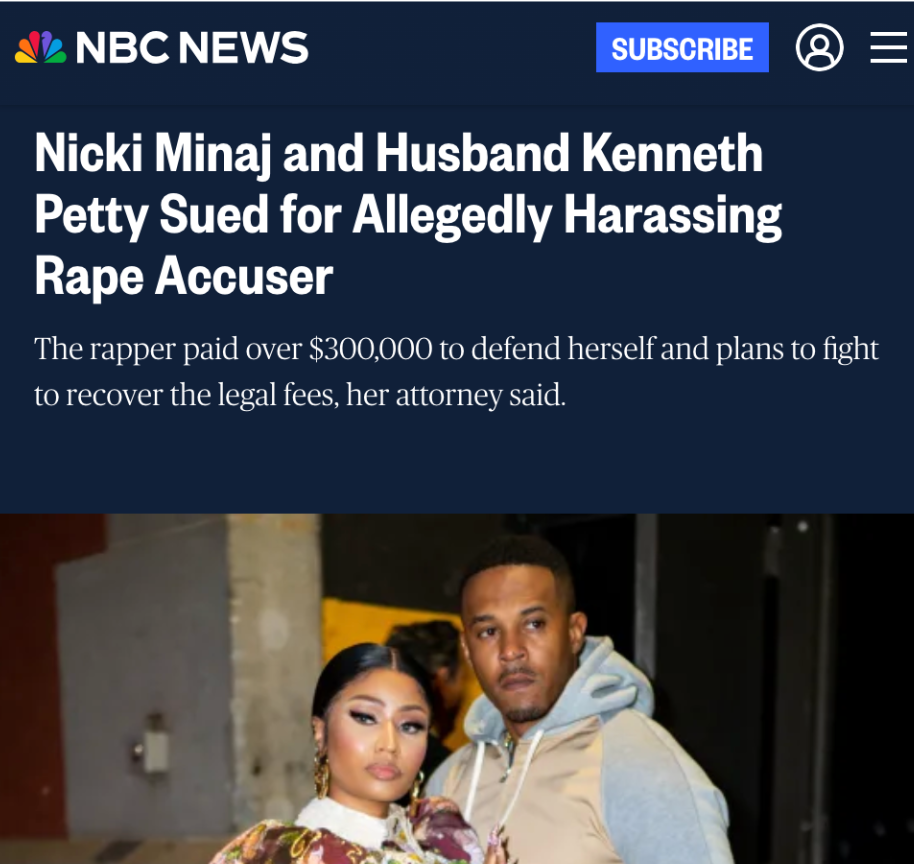
The math is stark. In 2022, a German court awarded security guard Thomas Weidenmuller a $503,318 default judgment against Nicki Minaj and her husband Kenneth Petty for a 2019 assault in Frankfurt. Weidenmuller claims Petty punched him in the face after he intervened in an argument between Minaj and a female security guard, leaving him with a broken jaw, five plates, and ongoing reconstructive surgeries using donor bones from a deceased person. Minaj and Petty never responded to the lawsuit. By December 2025, a Los Angeles judge is signaling intent to force the sale of Minaj’s Hidden Hills mansion to satisfy the unpaid judgment.
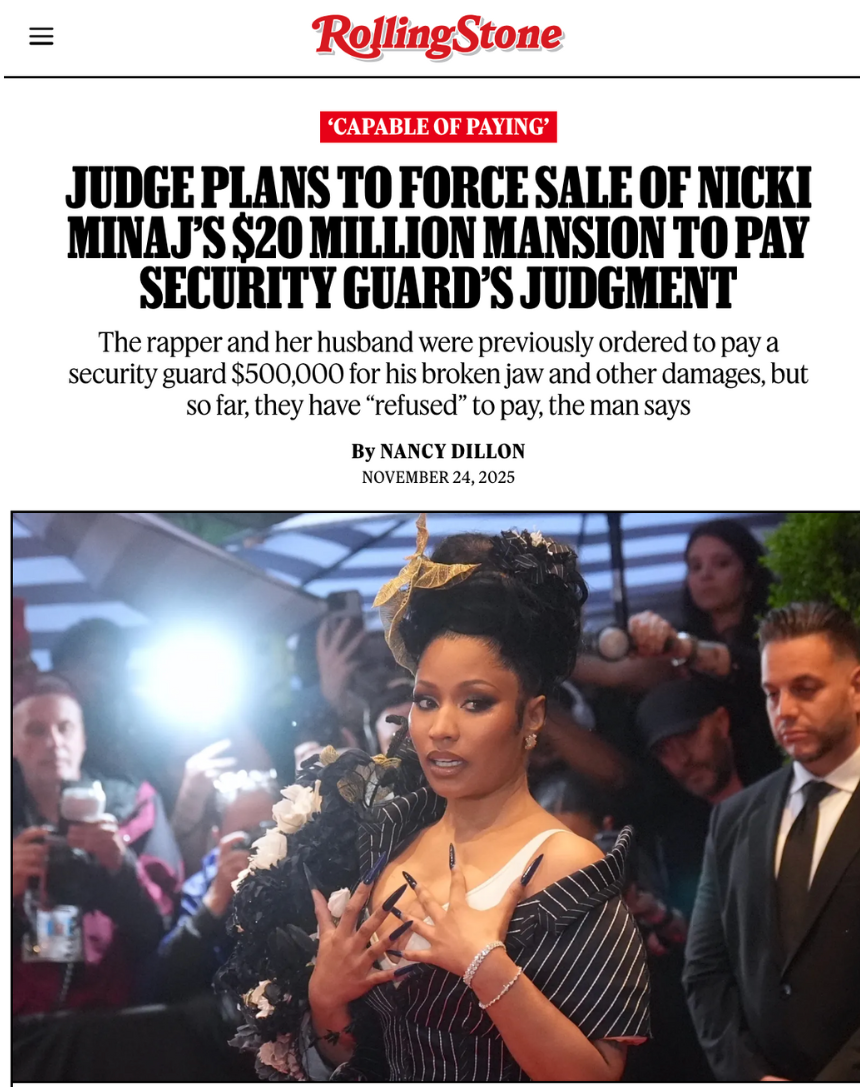
The timing of Minaj’s political transformation is difficult to ignore. As the mansion judgment enforcement accelerated through 2025, Minaj began making appearances that would have seemed inconceivable even two years prior. She appeared at Turning Point USA’s AmericaFest, suddenly expressing concern for persecuted Christians in Nigeria—a cause she’d never publicly championed before. She praised Ben Shapiro, a vocal pro-Israel commentator who has defended Israeli military actions in Gaza. She expressed her desire to perform in Tel Aviv, telling fans “I can’t wait to perform at Tel Aviv, I love Israel.”
This represents a remarkable evolution for an artist who built her career on hip-hop feminism and Black female empowerment. The genre Minaj emerged from has largely moved toward solidarity with Palestinian liberation; her peers like Kehlani and Macklemore have faced professional consequences for their advocacy. Yet Minaj moved in the opposite direction—and found welcoming stages in conservative spaces that would typically reject entertainers with her legal baggage.
Consider what else hovers over Minaj’s public image. In January 2025, her former tour manager Brandon Garrett filed a lawsuit accusing her of assault, battery, and intentional emotional distress, alleging she struck him in the face during an April 2024 incident in Detroit. Her husband Kenneth Petty is a registered sex offender with a manslaughter conviction, currently navigating federal restrictions. These are not the credentials that typically earn invitations to conservative Christian platforms.
Yet there Minaj stood at AmericaFest, a featured speaker. One possible explanation: political evolution is real, and people genuinely change their views. Another: conservative and pro-Israel spaces may simply apply different standards to controversial figures than progressive spaces do. A third, more cynical reading: Minaj recognized that in an industry where pro-Palestine advocacy costs careers, pro-Israel positioning—even amid serious legal troubles—opens doors.
The question isn’t whether we can prove which explanation is correct. The question is why Minaj might reasonably believe the latter would work.
The Allegations That Weren’t Disqualifying: Tiffany Haddish
The lawsuit filed against Tiffany Haddish in September 2022 contained some of the most serious allegations a public figure can face. Two siblings, then ages 7 and 14, accused Haddish and comedian Aries Spears of sexually abusing them in separate incidents involving sexually suggestive sketches. The suit alleged that in 2013, Haddish and Spears coerced the 14-year-old into mimicking fellatio for a video, and the following year involved the 7-year-old in a sketch titled “Through a Pedophile’s Eyes.”
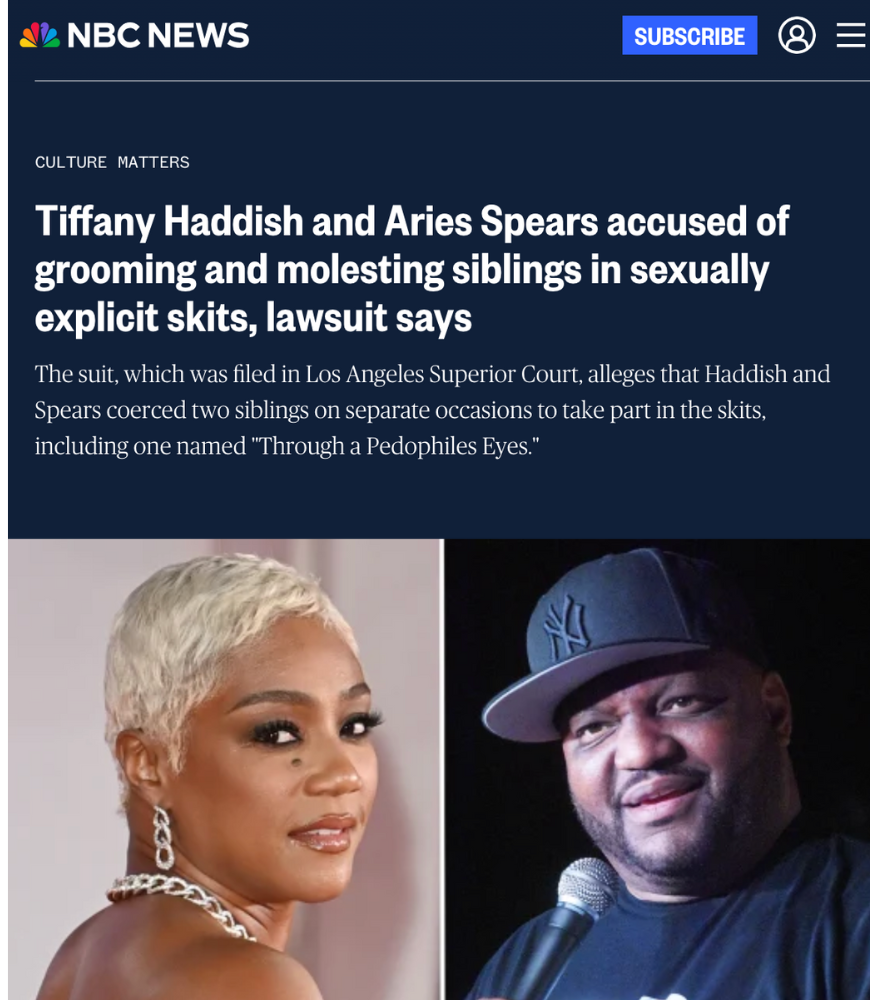
The lawsuit was voluntarily dismissed in September 2022, with the accuser stating they now know Haddish “would never harm them.” But the damage, by Haddish’s own account, was catastrophic. “I lost everything,” she said. “All my gigs are gone.”
In most contexts, this would be the end of the story. Allegations involving children—even when dismissed, even when recanted—typically represent an insurmountable reputational barrier. Kevin Spacey was acquitted of sexual assault charges in 2023; his career remains essentially over. The entertainment industry generally treats allegations involving minors as permanently disqualifying, regardless of legal outcomes.
Yet Tiffany Haddish found a path back. And that path ran directly through Israel.
In February 2024, as Gaza endured ongoing bombardment, Haddish announced a trip to Israel. She visited Tel Aviv, Jerusalem, the Dead Sea, and Nazareth, describing the journey as educational and sociological, stating she wanted to “learn and see with my own eyes” rather than rely on online information. Critics labeled it a sanitized “propaganda tour” that ignored restricted areas like Gaza and the broader context of reported war crimes. Haddish framed it as seeking understanding by speaking to people on both sides.
By May 2024, understanding had given way to provocation. During a performance at Netflix Is A Joke Fest, Haddish delivered a lengthy, incoherent rant about Israel, Palestine, and U.S. college protests. She claimed to have visited Israel to “find god” during personal struggles and amid the conflict. She compared Gaza to 1980s Los Angeles, then justified U.S.-style retaliation by saying “we fucked their ass up” in reference to 9/11, framing it as a display of imperial power. She dismissed college protesters as people who “never worked a day in their life” and urged them to “go to Israel and fuck shit up” there instead of in the U.S.
The rant was inflammatory enough that many viewed it as endorsing violent retaliation against Palestinians. Yet it earned Haddish something her career had lacked since the lawsuit: new platforms. Shortly after, she appeared alongside conservative Christian commentator Erika Kirk at Turning Point USA events. Kirk, who has built her brand on religious values and family conservatism, welcomed Haddish despite the nature of the dismissed allegations.
This is where the pattern becomes difficult to dismiss as coincidence. In what other context does someone lose “all my gigs” from dismissed child abuse allegations, then find professional rehabilitation specifically within pro-Israel and conservative Christian spaces? These are communities that typically hold strict standards around sexual morality and child protection. Yet they embraced Haddish—after her Israel advocacy, not before.
Three explanations present themselves. First: Haddish is Jewish by heritage, and her Israel trip represented genuine identity exploration during a difficult period. Second: conservative spaces may simply be more willing to accept that a dismissed lawsuit means innocence, while progressive entertainment spaces remain suspicious regardless of legal outcomes. Third: Haddish recognized that in an industry where Melissa Barrera lost Scream for criticizing Israel, pro-Israel positioning could provide shelter that her previous celebrity couldn’t.
Again, we can’t definitively prove which explanation is correct. But Haddish’s own words—”I lost everything”—suggest she understood her vulnerability. And her actions—the Israel trip, the inflammatory rant, the TPUSA appearances—suggest she identified a specific path to professional recovery.
The Most Explicit Pivot: Azealia Banks
If Nicki Minaj’s transformation seems opportunistic and Tiffany Haddish’s seems strategically timed, Azealia Banks’s pro-Israel turn represents something more brazen: an ideological about-face so complete it contradicts her own recent history.
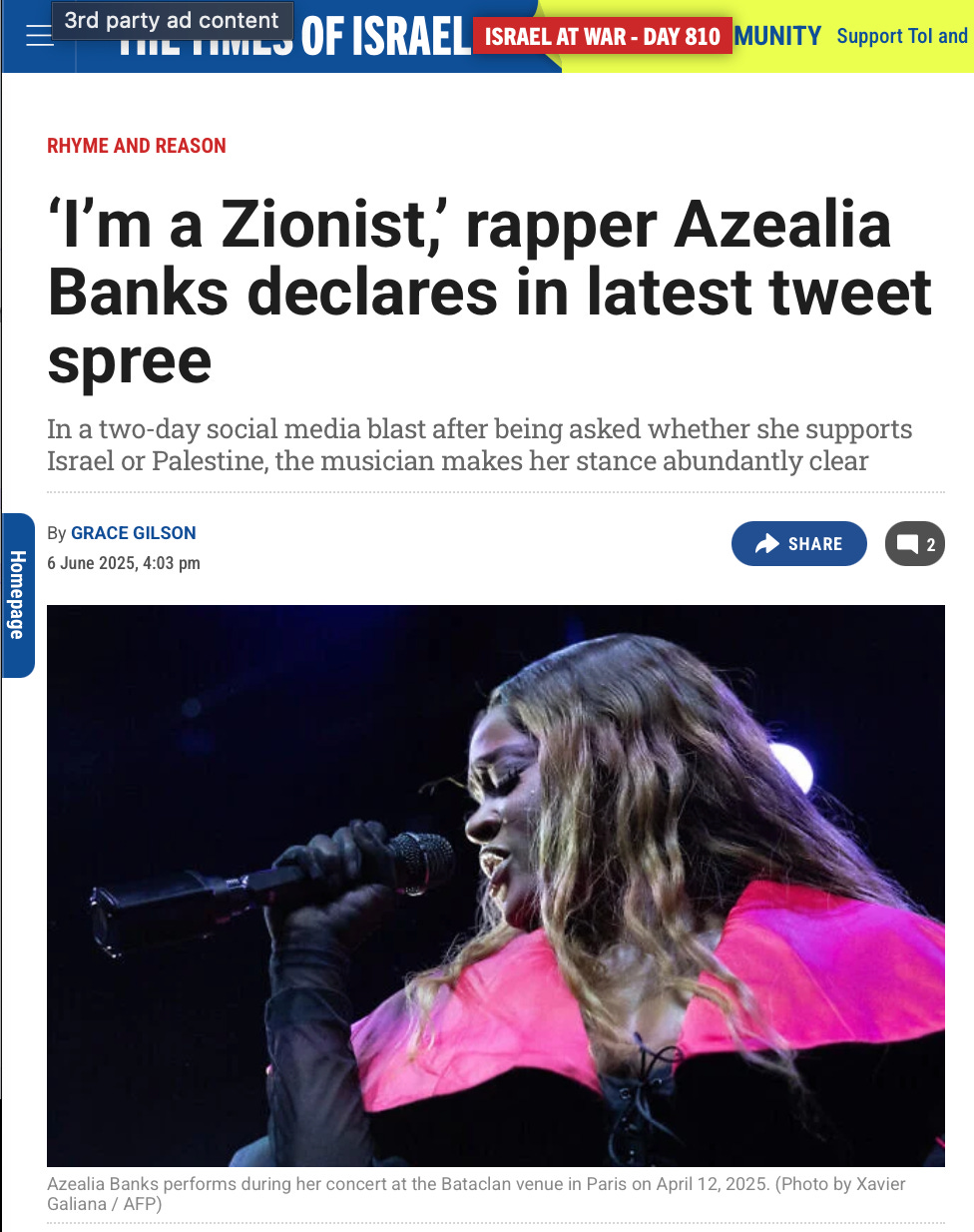
In 2018, Banks posted conspiracy theories claiming Jews control Black entertainment. By June 2025, she was declaring “I’m a Zionist” across more than 45 posts on X. By October 2025, she was performing in Tel Aviv, calling Israelis “not uptight neurotic cancel weasels” and defending her decision to play a country under international boycott. The transformation wasn’t gradual. It was abrupt, public, and unapologetic.
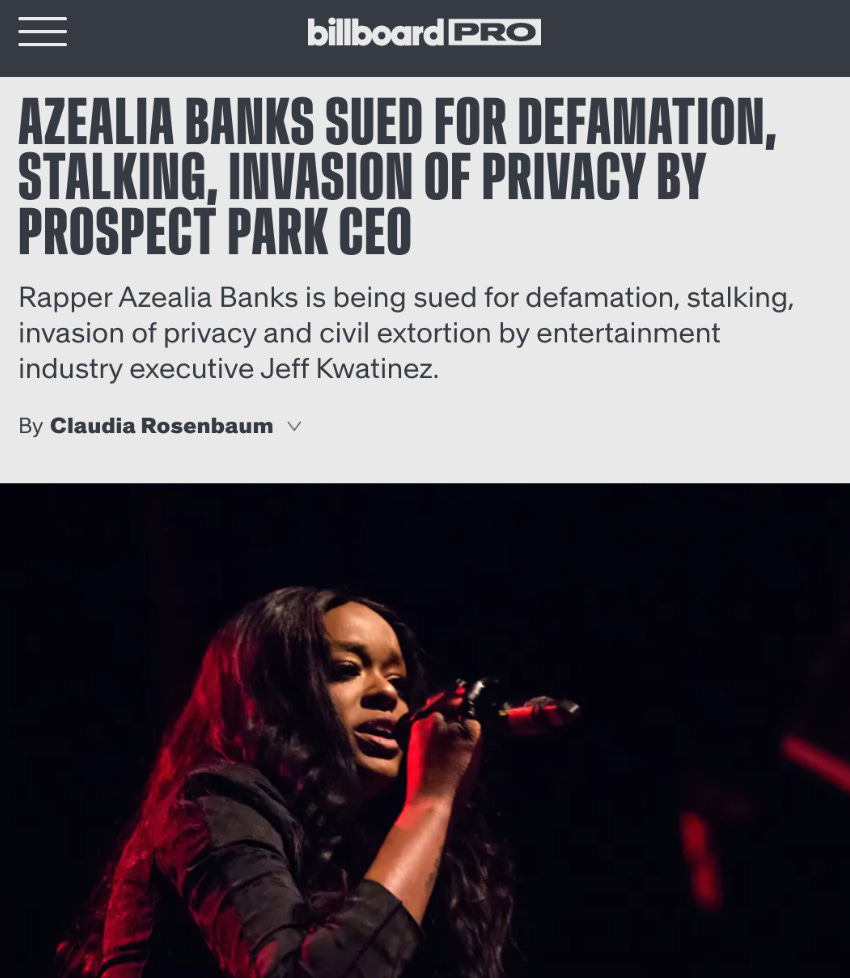
This happened as Banks navigates one of the messier ongoing lawsuits in entertainment. Since 2020, she’s been embroiled in litigation with Jeff Kwatinetz, founder and CEO of Prospect Park, her former label boss. Kwatinetz sued Banks for defamation, stalking, invasion of privacy, and civil extortion, alleging she posted threatening messages about him and his family, including a photo of herself outside his Los Angeles home. Banks countersued, claiming Kwatinetz manipulated her when she was 23 by blurring lines between a fiduciary and romantic suitor to take financial advantage, alleging he sent emails saying he loved her and had sleepovers with her. She claims she was paid only around $15,000 while owed at least half of the label’s reported net revenue of roughly $200,000.
The case remains active. Banks also carries a 2017 criminal conviction for assault after biting the breast of a nightclub security guard, and has faced multiple lawsuits over unpaid credit card debt exceeding $137,000.
Against this backdrop, Banks didn’t just express support for Israel—she became one of its most provocative celebrity defenders. In June 2025, she argued “No black person should be supporting Palestine,” citing alleged ongoing “chattel slavery” of Black people in the Islamic world. She rejected Palestinian statehood outright due to “the Arabic enslavement of Black people,” and called Palestine “not a country” because the area is “called JUDEA for a reason.” She compared the October 7, 2023 attack to terrorists opening fire at Coachella, questioning whether Israel should “take that L” without retaliation
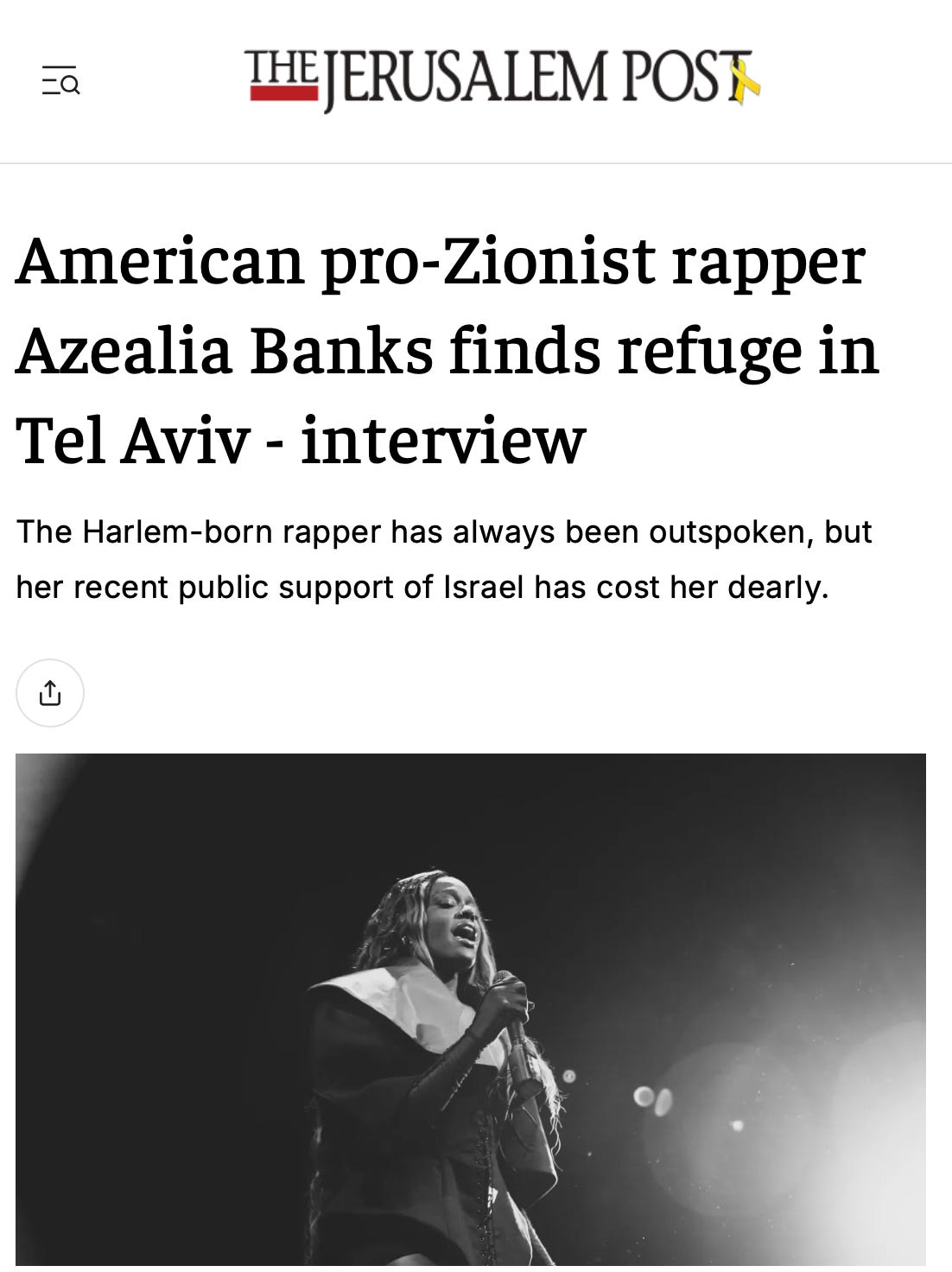
Her rhetoric grew more inflammatory from there. “I def don’t agree with [bombing Palestinians into oblivion],” she posted. “But I also don’t care.” She mocked Black celebrities as “dumbass” for “losing their jobs trying to stand up to the invisible Jewish boogie man”—a remarkable statement from someone who had previously promoted the exact conspiracy theory she now dismissed.
When Banks performed in Tel Aviv in October 2025, she defied international boycott calls and contradicted her own recent statements about Jewish control of entertainment. Critics called her a “sell-out.” The charge seems difficult to refute: Banks acknowledged Israel’s racism (”Israel IS racist as hell”), describing rejections at restaurants and salons, yet maintained her Zionist stance anyway. This suggests the position serves a purpose beyond sincere ideological conviction
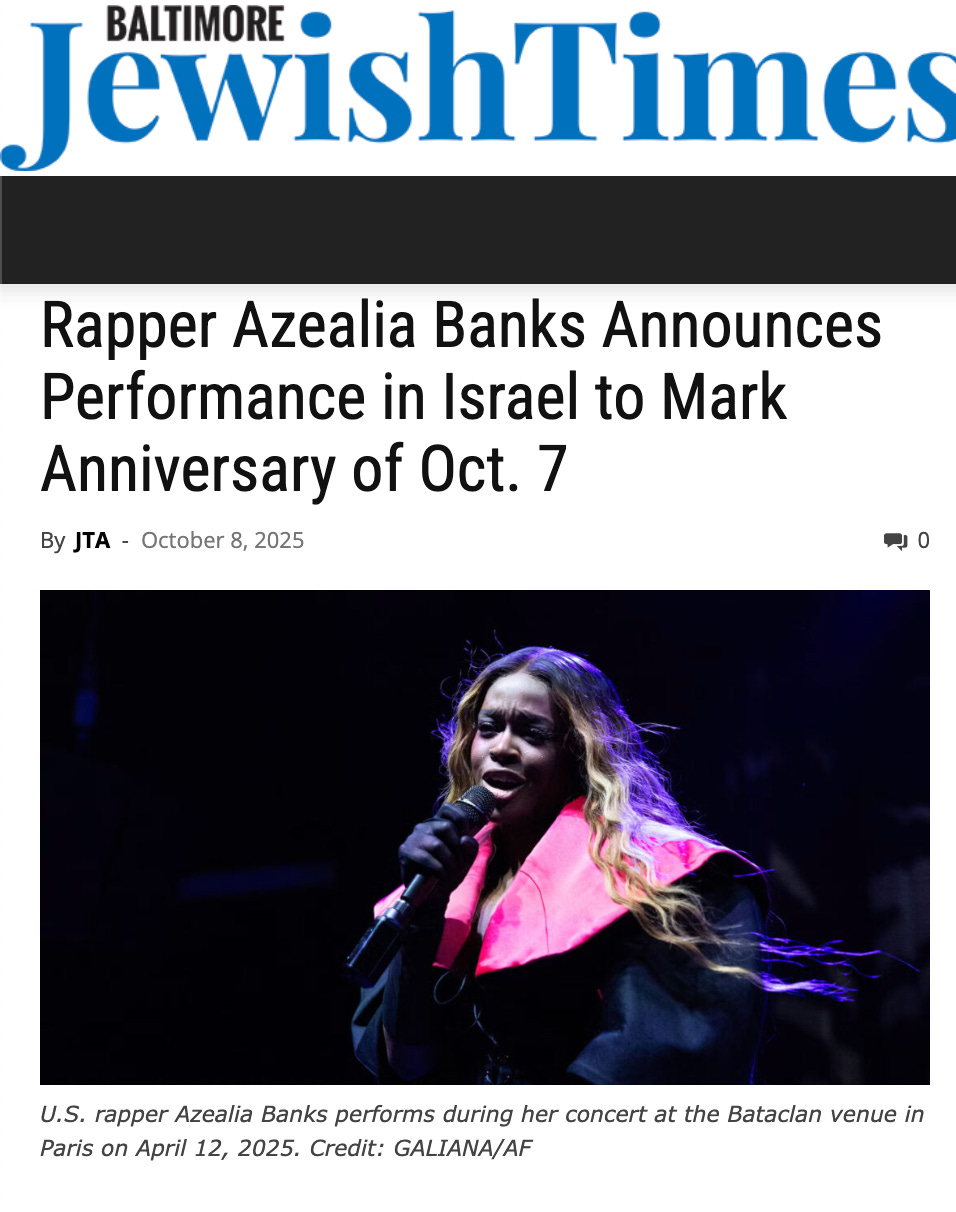
Banks is known for provocative, contrarian positions—this could simply be brand consistency. She may genuinely believe her stated concerns about the Arab world’s treatment of Black people, and her antisemitic past could represent views she’s genuinely rejected. But the timing remains conspicuous. As ongoing litigation threatens both her finances and freedom of movement (civil extortion and stalking allegations carry serious consequences), Banks became one of the most vocal pro-Israel entertainers in Black music—a position virtually guaranteed to alienate her existing fanbase.
The question, again, isn’t whether we can prove Banks’s motivations. The question is what she might reasonably believe this positioning accomplishes. And the answer appears in her own mocking post about Black celebrities losing jobs over Palestine advocacy: Banks seems to believe that pro-Israel positioning provides professional protection that pro-Palestine positioning costs. Whether she’s correct is less important than whether she acts on that belief
The Asymmetry of Consequence
Step back and consider the landscape these three entertainers are navigating.
On one side: Melissa Barrera fired from Scream for Instagram posts. Susan Sarandon dropped by her talent agency for attending rallies. A clear pattern of professional consequences for pro-Palestine advocacy, even when expressed moderately or coupled with condemnations of antisemitism.
On the other side: Nicki Minaj on TPUSA stages despite unpaid assault judgments and fresh abuse allegations. Tiffany Haddish welcomed by conservative Christians despite dismissed child sexual abuse lawsuits. Azealia Banks performing in Tel Aviv despite ongoing stalking and defamation litigation.
The pattern isn’t subtle. Pro-Palestine advocacy, even from entertainers with clean records, costs careers. Pro-Israel advocacy, even from entertainers with serious legal troubles, opens doors—specifically to conservative and pro-Israel platforms that might otherwise reject controversial figures.
This asymmetry exists for structural reasons. Pro-Israel advocacy aligns with institutional power in American entertainment and politics. It signals allegiance to established interests rather than challenge to them. Conservative and pro-Israel spaces have demonstrated willingness to overlook legal troubles, personal scandals, and reputational baggage when public figures adopt their geopolitical positions. Progressive spaces, by contrast, have increasingly treated pro-Palestine advocacy as a litmus test while simultaneously maintaining strict standards around allegations of abuse or assault.
None of this proves quid-pro-quo arrangements. We have no evidence that Minaj, Haddish, or Banks received explicit promises of protection or platform access in exchange for their positions. But explicit arrangements aren’t necessary for rational actors to identify patterns and adjust their behavior accordingly.
If you’re Nicki Minaj watching your mansion face forced sale, you don’t need someone to spell out that MAGA spaces welcome controversial figures who adopt their positions. If you’re Tiffany Haddish after losing “everything” to dismissed allegations, you don’t need a handbook to recognize that pro-Israel advocacy might provide rehabilitation that pro-Palestine advocacy demonstrably costs others. If you’re Azealia Banks fighting litigation that could result in financial ruin, you don’t need a conspiracy to notice that Tel Aviv stages pay and don’t cancel.
What we can observe is this: three Black female entertainers, all facing serious legal challenges, all made nearly simultaneous decisions to embrace pro-Israel positions that alienated their existing fanbases. And all three found new platforms as a result—platforms that demonstrably reject entertainers for opposite positions regardless of their legal standing.
Whether this represents opportunism, desperation, sincere political evolution, or calculated survival strategy, the pattern itself reveals something about the entertainment industry’s hierarchy of acceptable controversies. Some positions are treated as disqualifying regardless of legal outcomes. Others provide shelter despite them.
Follow the Documents
The next time a public figure makes a sudden political pivot that alienates their base—particularly toward positions that are institutionally protected but popularly controversial—a simple exercise presents itself: check the court documents.
Not because the correlation proves causation. Not because every unexpected political stance represents transactional corruption. But because patterns, once recognized, become predictive. And this pattern—legal vulnerability coinciding with provocative pro-Israel positioning—has now repeated three times in two years among Black female entertainers alone.
The broader question this raises cuts deeper than individual motivations: Why would these three reasonably believe that pro-Israel advocacy would provide professional shelter during legal troubles? What does their apparent calculation tell us about which controversies the entertainment industry considers forgivable and which it considers permanently disqualifying?
The answer appears in the asymmetry itself. Melissa Barrera lost Scream for calling Gaza a concentration camp—a factual description many human rights organizations support. Tiffany Haddish found stages after dismissed child abuse allegations—accusations that typically end careers regardless of legal outcomes. The first position challenged institutional power. The second aligned with it, once Haddish made her Israel trip.
In an industry where taking the “wrong” position on Israel costs careers but serious legal troubles don’t—provided you take the “right” position—rational actors will respond rationally. Whether we call that response opportunism, self-preservation, or political evolution matters less than acknowledging the incentive structure that produces it.
Minaj, Haddish, and Banks may have arrived at their positions through genuine conviction. They may believe every word of their pro-Israel advocacy. But their timing, their legal circumstances, and the specific platforms that welcomed them despite those circumstances suggest they also understood something else: in contemporary American entertainment, some controversies open doors while others close them. And the difference has less to do with the nature of the allegations against you than the geopolitical positions you’re willing to adopt.
The pattern won’t stop with these three. As long as the asymmetry persists—as long as pro-Palestine advocacy remains professionally dangerous while pro-Israel advocacy provides institutional shelter—others facing legal or reputational crises will draw the same conclusions. Watch for them. And when you see that sudden pivot, that unexpected embrace of a position that alienates an entire fanbase, remember to ask: What else is happening in their lives? What are they trying to outrun? And what do they believe will catch them if they run in this particular direction?
The court documents, more often than not, will tell you.
— ZirafaMedia


